
The winners have been announced for the second edition of the Soil O-Live International Competition: Soil Health and Quality (The Soil Health & Olive Oil Quality Awards 2024), the only competition that links soil health with oil quality. Three oils from Cordoba have been recognised for their high quality and link to sustainability, and one from Jaén has demonstrated the best soil quality, in a much broader edition that consolidates this competition as a benchmark in innovation and agronomic sustainability.
The global competition has been promoted by Soil O-Live, a project 100% funded by the European Union and coordinated by the University of Jaén, in which Deoleo participates as the world’s leading olive oil company. The awards will be presented at the International Conference on Sustainability in Olive Cultivation (ICSOC) to be held on 25 and 26 September 2025 in Úbeda.
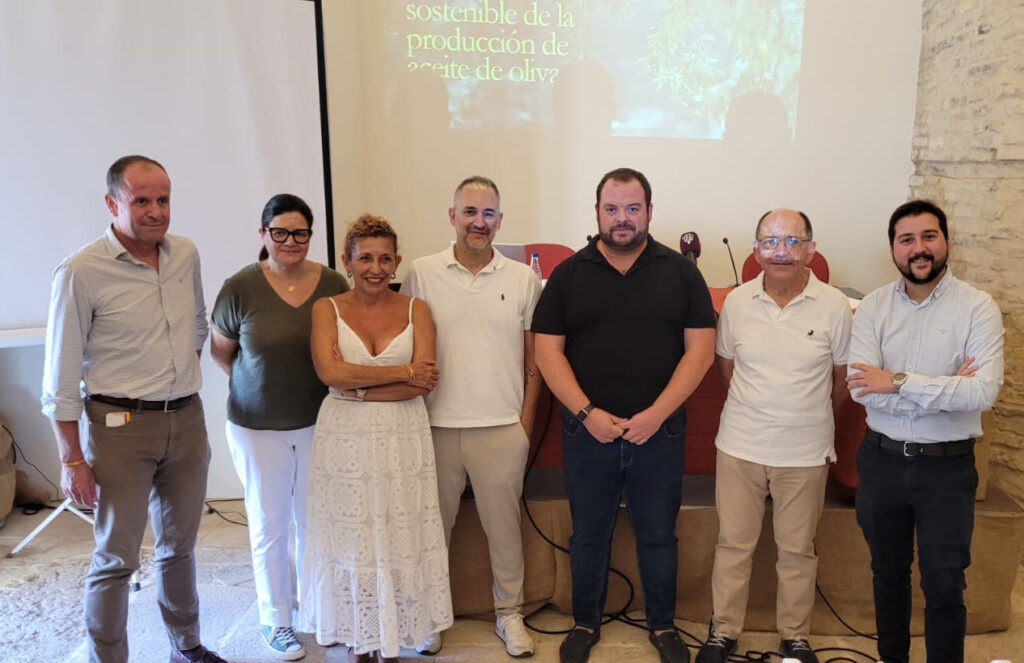
The winners were announced at a training session for farmers held at the Molino Aceitero del Conjunto Vergara in Doña Mencía (Córdoba), where training was provided on sustainable practices and the advantages of proper soil care to achieve higher quality oil. The event also served to highlight the tangible impact of the project, which has already promoted 41 training sessions that have benefited 931 farmers in Spain and abroad.
The coordinator of the European Soil O-Live project, Antonio Manzaneda, professor of Ecology at the University of Jaén, expressed his satisfaction with the number and quality of the samples received in the competition. ‘It is encouraging that many farmers and producers are beginning to realise the importance of maintaining healthy soil and how this affects the quality of the oil,’ he said. He also emphasised the importance of continuing to work to inform and raise awareness about environmental sustainability among professionals in the field, reminding them that soil, as a non-renewable resource, is essential for the productivity and biodiversity of olive groves.
For his part, Juan Carrasco, Global Sustainability Manager at Deoleo, is proud that Deoleo is part of the Soil O-Live Project and that it is providing its facilities for the tasting for this competition, which is very much in line with its global sustainability strategy and its commitment to transforming the olive oil value chain from the source. ‘At Deoleo, we are convinced that the quality of oils is not only compatible with caring for the environment, but that the quality of oil comes from sustainable agricultural practices in the olive grove,’ he says.
Juan García, field technician at Almazaras de la Subbética, and Fernando Ruiz, manager of the Ntra Sra de la Consolación cooperative (Doña Mencía), belonging to the Almaliva group, also took part in the training day. Both highlighted the important role of the cooperative in the Soil O-Live project and its adherence to Deoleo’s Sustainability Protocol since its launch in 2018. ‘In these seven years, we have taken decisive steps in sustainability: from soil care and regeneration to reducing emissions and incorporating more egalitarian practices in the field,’ Ruiz emphasised.
Three oils from Cordoba and one from Jaén, awarded for their quality and good soil
An oil of the Arbequina variety from Almazara Subbética won first prize in the Light Fruity category. The jury highlighted its light and fresh fruity aroma of green olives, hints of green banana, artichoke and green almonds; and on the palate, ‘the juice is sweet and fluid with a slight bitterness and spiciness that progresses to resemble black pepper’, according to the minutes.
The first prize in the Medium Fruity category went to an oil of the Picual variety from the Morellana brand, produced by the Cordoba-based oil mill Sucesores Hermanos López de Luque. The jury highlighted that this EVOO is a harmonious and complete oil overall. On the nose, they describe it as ‘medium fruity with green olive, with aromas of green wheat, green almond, green banana peel and tomato plant; and on the palate, a spicy and bitter aftertaste, balanced and of medium intensity’.
In the Intense Fruity category, the winner was another oil from Almazara de la Subbética, specifically from the Hojiblanca variety. The description of this EVOO is as follows: ‘The nose is surprisingly intense with green olive fruitiness, aromas of spontaneous vegetation cover accompanied by tomato plants, lettuce stalks, aromatic and wild herbs; and on the palate it is sweet and very fluid, with a medium to intense progressive spiciness and bitterness, bold and balanced, with an aftertaste of green olives, spices and grass.’
The award for Best Soil went to the sample ‘La Casona en Rama’ from the Agropecuaria El Puerto de Pegalajar oil mill in Jaén. This soil has presented respiration values higher than 9 micrograms of CO2-C/gram per hour, values that are comparable to those found in well-preserved Mediterranean forests, indicating high microbial activity.
Soil as a key evaluation criterion
The competition had two distinct evaluation phases. First, the Soil O-Live scientific committee analysed the soil samples submitted, selecting 16 entries for the next stage, which involved tasting the oils by specialised experts. The tasting competition was held on 10 July at the Deoleo facilities in Alcolea, following the intervention of a notary to reference and guarantee the anonymity of the samples submitted.
The jury was made up of renowned experts such as Marzia Migliorini, head of Deoleo’s Sensory Laboratory; Mª Carmen Serrano, head of La Oleoteca de Córdoba; José María Penco, director of AEMO; and Plácido Pascual, head of the virgin olive oil tasting panel at the Córdoba agri-food laboratory attached to the Agricultural and Fisheries Management Agency (AGAPA).
The novelty this year is that the competition opened up participation to all oils, whereas in its first edition it was limited to those produced on farms participating in the Soil O-Live project. Both editions have demonstrated that maintaining healthy soil is not incompatible with quality.
