The European Soil O-live project has reached a new scientific milestone that is essential for optimising soil regeneration in a context of concern, given that, according to a recent publication in the journal Nature, European soils have high levels of pesticide contamination, which also has an impact on soil biodiversity and its ecological function. In this regard, research led by Professor Cristina Sáez Jiménez of the Department of Chemical Engineering at the University of Castilla-La Mancha (Ciudad Real), Professor Cristina Sáez Jiménez, in collaboration with the University of Jaén and the Institute of Sustainable Agriculture (IAS) of the CSIC, has demonstrated, in a series of microcosm experiments, the effectiveness of electroremediation in eliminating pesticides in agricultural soils, in this case olive groves, in a sustainable manner.
The results of this research have been published in the prestigious environmental chemical engineering journal Journal of Environmental Chemical Engineering. The article “Oxidative technologies for olive grove soils: impacts of electrogenerated H2O2 and O3 on pesticide degradation and ecosystem health” explains that they have investigated the remediation of olive grove soils contaminated with atrazine and glyphosate through the use of green oxidants, specifically hydrogen peroxide and ozone, generated electrochemically directly in real, unaltered soil. Over a period of 30 days under laboratory conditions, the effectiveness of these treatments was evaluated, observing that both oxidants significantly degrade pesticides: hydrogen peroxide achieved eliminations of over 60% for atrazine and 25% for glyphosate, while ozone achieved levels of 40% and 21% respectively.
The results suggest that a limiting factor in remediation is not only the amount of oxidant used, but also the difficulty of transporting these substances through the soil structure. A crucial finding of the study is the differential environmental impact: while hydrogen peroxide suppressed soil respiration, at least temporarily, and increased the mortality of nematodes used as bioindicators, ozone proved to be aseptic with biological activity. In conclusion, electrochemically generated ozone is emerging as the most viable strategy for field use, as it combines effective pollutant removal with the preservation of soil ecosystem health and functionality.
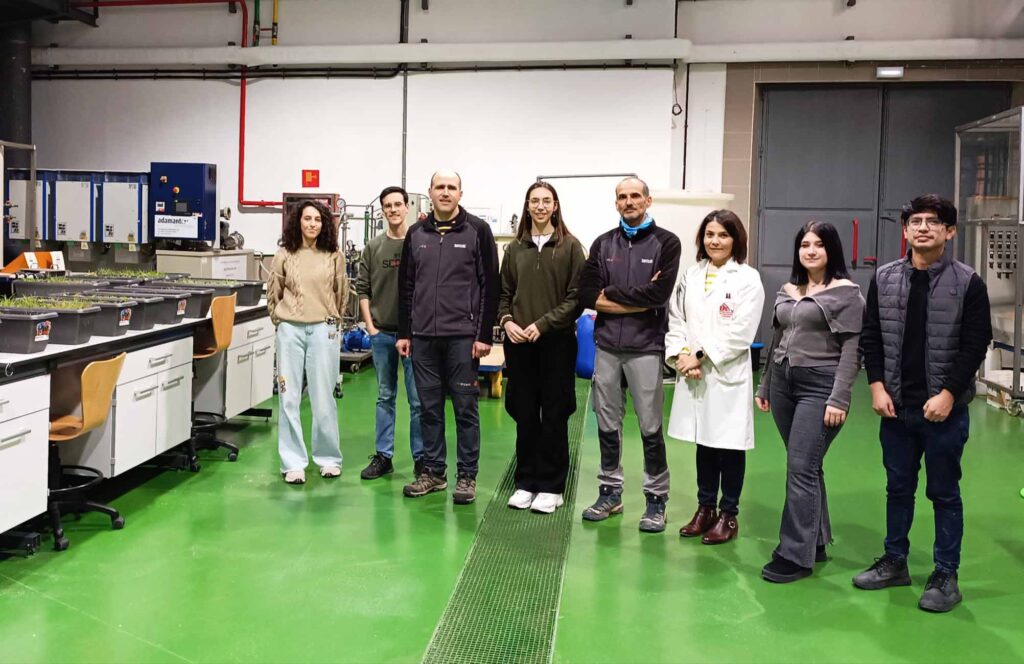
The article is signed by researchers Cristina Navas Higuero, Bryan Andres Tiban Anrango, Engracia Lacasa, Manuel Andrés Rodrigo, and Cristina Sáez Jiménez from the University of Castilla-La Mancha; Víctor Valenzuela Polo, María Isabel Reyes-Alcalde, Antonio José Manzaneda, Antonio José Rascón and Juan Francisco García-Reyes from the University of Jaén; and Rosa Salazar García and Juan Emilio Palomares-Rius from the IAS-CSIC in Córdoba.
This scientific discovery has been made precisely during the restoration phase of the Soil O-live project, which aims to continue improving soil health and provide solutions to specific problems identified in the project, such as the presence of various types of contaminants in these soils and their low biodiversity.