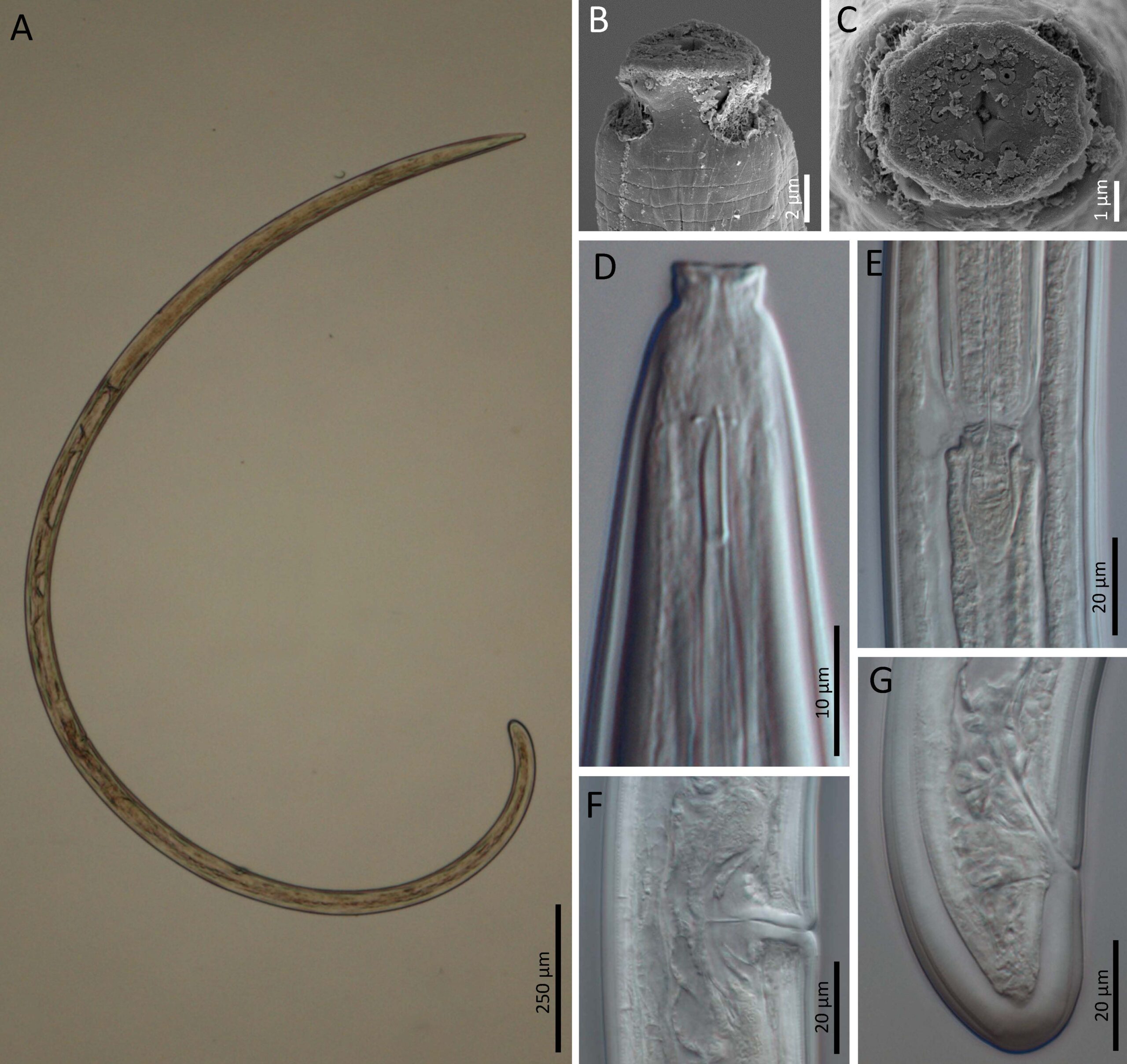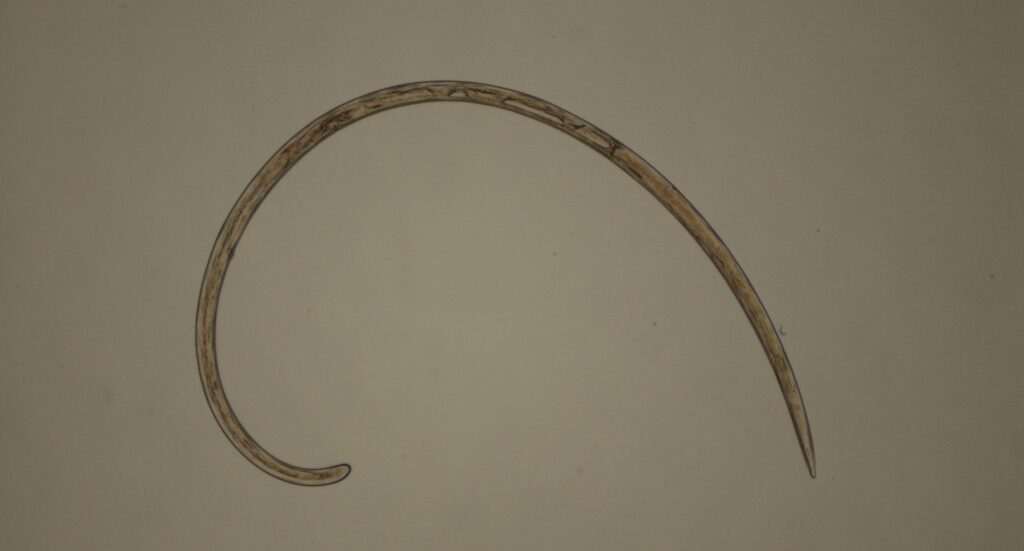
 The discovery of a new genus of free-living nematode has been the subject of the first scientific publication in the framework of the Soil O-Live project. Specifically, the journal “Zoosystematics and Evolution” published in its latest issue the article “Oleaxonchium olearum gen. et sp. nov. (Nematoda, Dorylaimida) associated with an olive grove in the southern Iberian Peninsula, and new insights into the evolutionary relationships within Belondiridae”, on 25 July.
The authors of the article are Reyes Peña Santiago, Miriam García Ruiz, Alba N. Ruiz Cuenca and Joaquín Abolafia Cobaleda, members of the Department of Animal Biology, Plant Biology and Ecology of the University of Jaén and researchers attached to the European project.
Nematodes are unsegmented, millimetre-sized, cylindrical, non-segmented worms that are very abundant in soils, where they actively participate in the soil food web. Most of them are free-living forms, beneficial for their contribution to nutrient recycling, but some species are harmful, capable of attacking plant roots, in some cases even causing plant diseases.
The newly discovered genus shows a unique combination of features that distinguish it from its closest genera: a rectangular labial region with sclerotised margins when viewed in lateral view, and visibly hexagonal in frontal view, as if forming a sucker.
The discovery was made during the analysis of soil samples collected as part of the Soil O-Live project for the evaluation of soil biodiversity. This European project studies the soil of olive groves from all points of view, including that of fauna. In the case of this article, the researchers stress that the ecosystem found is so good that previously undescribed species survive and that it harbours an excellent microfauna for the soil and therefore for the olive grove.
Professor Joaquín Abolafia, one of the researchers responsible for the discovery, assures that the advances made so far within the Soil O-Live project have exceeded their initial expectations. “We make a very positive assessment of the work carried out so far,” says the researcher, adding that among the conclusions they have reached is that, although the olive grove soil is generally degraded, they see how good olive grove management means that its soils have characteristics as good as or better than natural soils where man has not intervened.