
The influential journal Nature recently published an article by Soil O-Live project coordinator Antonio Manzaneda and several of the researchers involved in the project on the alarming situation of Mediterranean olive grove soil and the work being done by the European Soil O-Live project.
Pasquale Borrelli, Francis Matthews, Philipp Saggau and Konstantinos Kaffas from Roma TRE University; Panos Panagos from the European Commission’s Joint Research Centre; Christine Alewell from the University of Basel and the aforementioned Antonio Manzaneda, are the authors of the article ‘Losing ground unsustainably’, in which they list the reasons and signs of declining soil health in Europe’s agricultural landscapes. They highlight how short-term productivity has been prioritised over long-term soil conservation, an imbalance that is particularly evident in crops such as olive groves and vineyards. According to data from the European Commission, 60-70% of the EU’s soil is currently in an unhealthy state, which is why the European institution has allocated nearly €1 billion in research funding under the Soil Mission. This programme is creating new opportunities to advance our understanding of soil health and address specific soil degradation challenges.
The article published in Nature addresses the specific case of olive groves and their importance for Europe, especially for regions such as Andalusia, the world’s largest producer of olive oil.
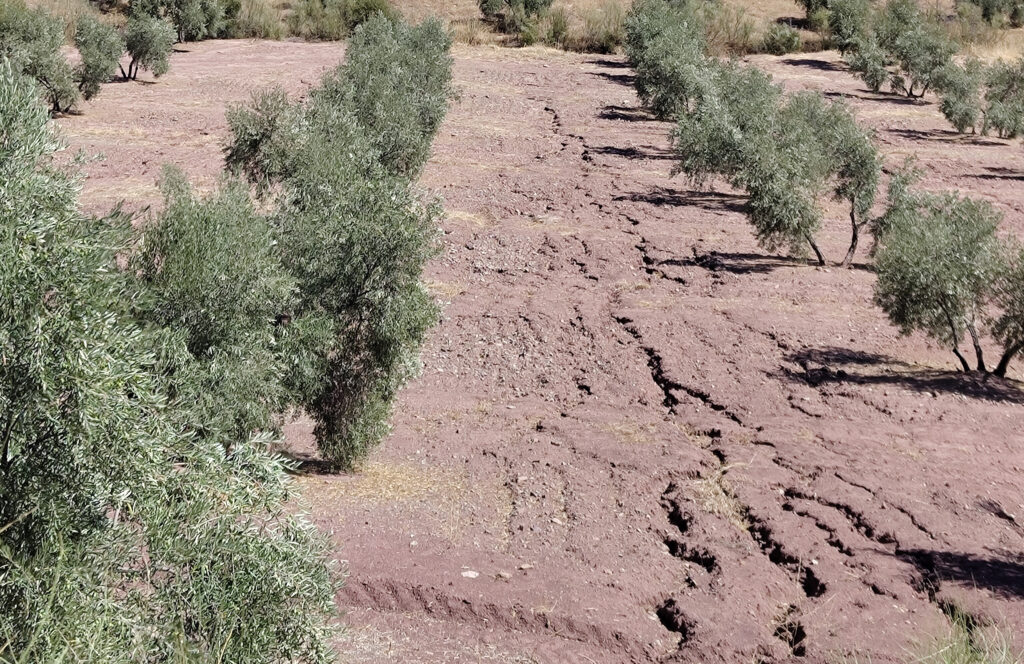
It also highlights how the Soil O-Live project evaluates sustainable management strategies to improve soil resilience and productivity, and mentions other issues such as the alarming spread of gully erosion in olive groves, the most serious form of soil loss due to water erosion; the ecological and socio-economic consequences of erosion and the deterioration of soil health; and the need for proactive actions and policies to reverse this situation.
For Professor Antonio Manzaneda, it is ‘essential’ to report on the actual condition of the soil in order to raise awareness and ensure that farmers apply the appropriate remediation measures to care for olive grove soils and thereby improve oil quality.
The results derived from Soil O-Llive will be used by the European Union to gain a better understanding of the health of Mediterranean olive grove soil and to design more precise agricultural policies for European olive cultivation in relation to environmental sustainability and the quality and safety of olive oils.
In the final stage of the project, the impact of the restoration actions carried out on the overall health of the soil, the general condition of the trees and their direct and indirect effect on the quality of the olive oil will be assessed, both through analysis of its physical-chemical profile and its organoleptic characteristics. During this final phase, and for each production method, thresholds and new standards will also be determined for the application of plant protection products with the potential to affect soil biodiversity and its functions.
This article joins other scientific publications produced within the framework of the European Soil O-Live project.